Products
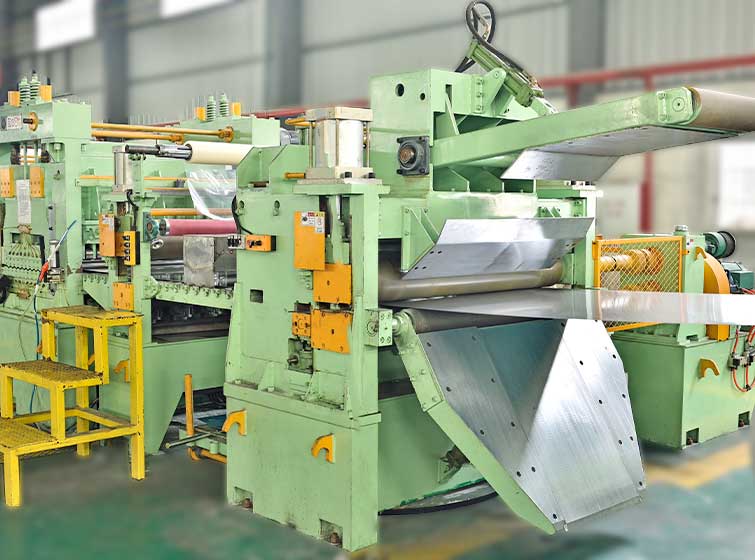
Pinching Device
The Pinching Device is used for pinching to convey the rolled steel strip. The Pinching Device is composed of the lower mounting frame and the upper mounting frame. The upper mounting frame is located directly above the lower mounting frame. The upper end of the lower mounting frame is fixed with a lower support frame. The upper end of the lower support frame is equipped with a power wheel. The power wheel is connected to the lower support frame, the drive motor is provided on one side of the power wheel, The lower end of the lower support frame is fixed with a lower connecting rod. The other end of the lower connecting rod is fixed and mounted. Need to clean the tape before pinching. Remove the iron scraps, beads, or oil stains from the steel strip surface. Prevent wear of the power and pressing wheels during pinching. Extend the service life of power and pressing wheels. At the same time preventing water droplets or oil stains can avoid skid phenomenon in the process of delivery, and can ensure the pinching effect.
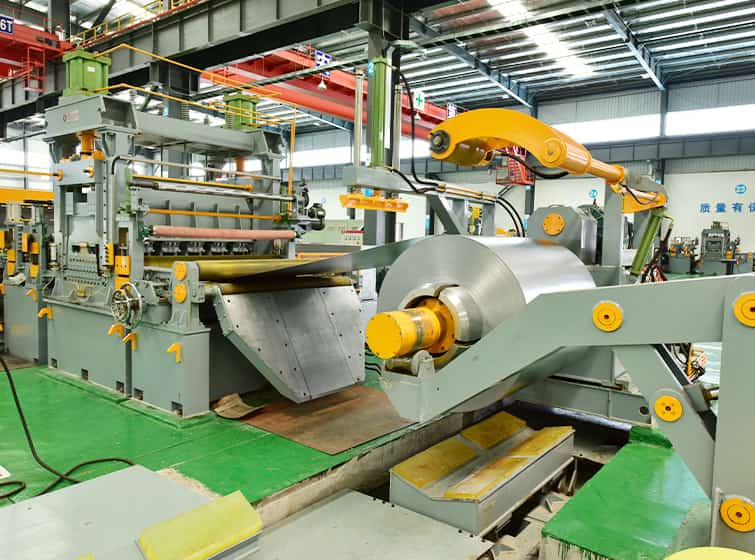
Decoiler Device
The first process in the production line of shear machine is to open roll, which will use the Decoiler Device. The Decoiler Device is used to support the steel coil, rotary steel coil. With the requirement of speed and plate quality, the type has gradually developed to the expansion drum type decoiler device. Decoiler device is equipped with driving mechanism. The rolling of the rolling material is driven by the driving roll. In order to deploy the roll bearing material and enter the printing device continuously and stably, the lateral adjustment mechanism and tension control mechanism are provided on the open and rewinding devices for controlling the lateral positioning and tension of the tape. In addition, some flexible printing presses using belt and material roll surface friction to produce the material roll braking force. The installation of material coil is divided into two types: core axis type and no core axis type. Due to the cone head clamping is easy to damage the edge of the coil, so now many flexible printing presses use the expansion core shaft clamp, expansion shaft can be divided into mechanical and pneumatic types. The Decoiler Device composed of guide screw, nuts, and expansion,rolling system and expansion drum, pressing roller and supporting device.
When the conveyor device feeding the material into the Decoiler Device, the hydraulic decoiler expands the claw plate to tighten the steel coil, and the rise and contraction should be cooperate with the roll to avoid break the car or the decoiler shaft.
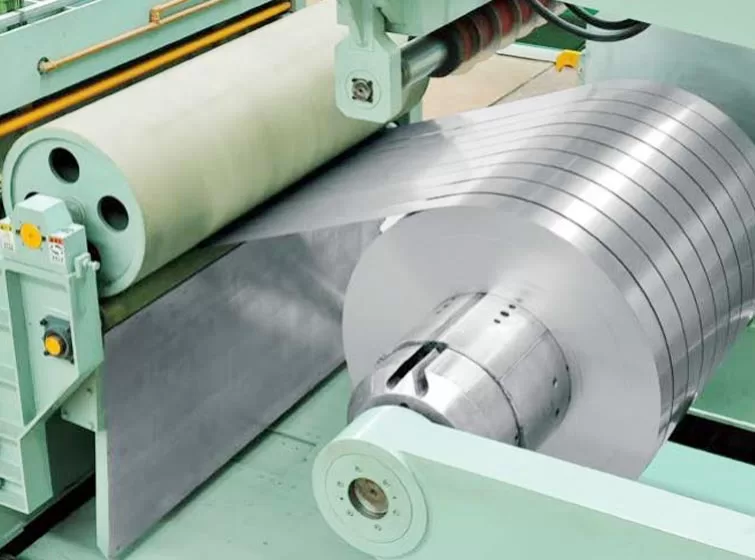
Recoiler Device
The Recoiler Device Rolling is a kind of metal plate machine side material winding device, including winch device, winch device and metal plate cutting device quality inspection flying side machine. The device includes the rod, nut, guide seat, and the base (the rod is fixed to the base).
When the conveyor device feeding the material into the decoiler, the hydraulic decoiler will expand the claw plate to tighten the steel coil, and the rise and contraction should be cooperate with the roll and the fall to avoid break the conveyor device or the decoiler device. The Recoiler Device will press tight the steel coil when going down. Start the Decoiler Device rotate, and import the plate head through the front connector. When the reversed tension is selected, the opportunity to tighten the steel belt to prevent loose winding, and the given tension according to the size of the roll to meet the whole line operation requirements.
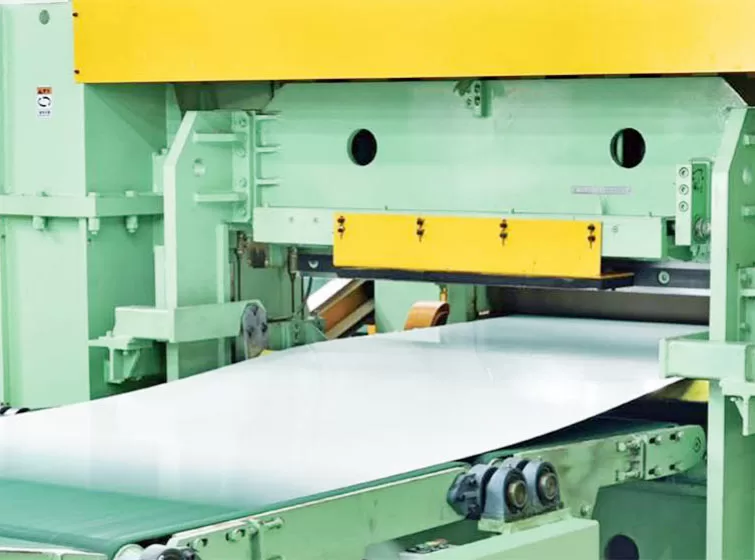
High-Speed Precision Rotary Shear Device
The high-speed precision rotary shear device is composed of rotary shear box components (lower seat, middle and lower seat, middle seat, middle and upper seat, upper cover, transmission shaft, inclined gear set, upper and lower knife frame, knife body and smooth system) and other components. The reverse knife holder is equipped with a single blade, and two knife shafts are arranged parallel to start the stop working system. After the first shear cycle, the motor drives down the knife shaft by the reducer, and the upper and lower knife shaft is driven by the gear. The lower knife shaft is connected to the rotating device. The motor uses external ventilation type DC motor, and is equipped with speed measuring motor, used to measure the speed of the DC motor.
The device is composed of transmission device, shear seat and rotary shear box assembly and other components. The motor and the reducer are equipped with a safety tooth coupling to ensure the safe use of the shear machine. The shear seat is a four-layer welding box with four gear shafts, the upper and lower are knife frame shafts, and the center two are transition gear shafts. The upper knife shaft is equipped with a photoelectric encoder to control the rotary shear blade at the beginning of the cutting process.
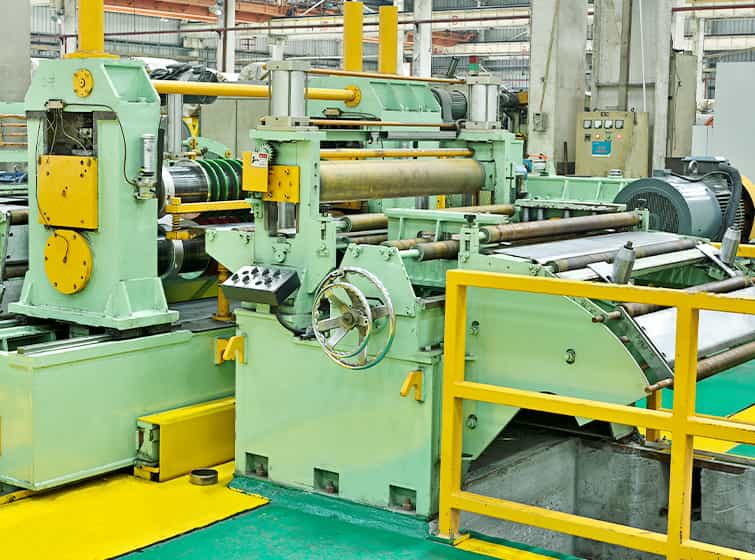
Guiding Table Device
Through the hand wheel rotation and the bidirectional wire rod, the steel coil is sent to the cutting bed smoothly by the feeding roller. If the customized model has a leveling roller must be adjusted according to the thickness of the processing plate. The guiding table should be able to guide normally. The guiding table is appropriate to touch the side of the plate, the plate is not touched, will make the ruler is not accurate, the plate is too large, will make the plate edge damage, pay attention to the model of no side guide according to different models. The measuring wheel measures the length and speed of the plate, to determine that the measuring wheel rotation is flexible.
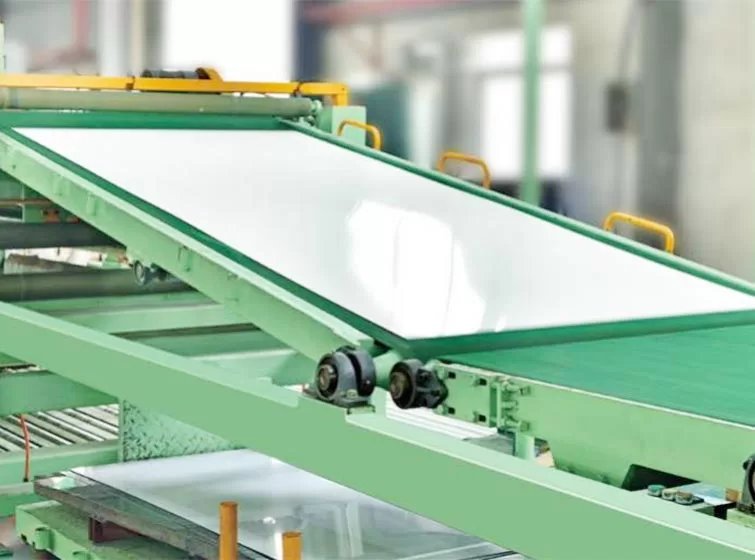
Conveyor Device
Composed of conveyor device, conveyor thread, conveyor face, drive shaft/adjustment shaft, lift oil cylinder and control system. The conveyor device is welded and processed by high rigid square steel pipe and rectangular steel pipe. The upper part of the conveyor device is coated with galvanized steel plate.
Expansion tape conveyor is divided into two parts: fixed part and non-fixed part. The fixed part is composed of head drive, belt storage, collecting and releasing tape, etc. and the non-fixed part is composed of detachable support and tail without bolts.
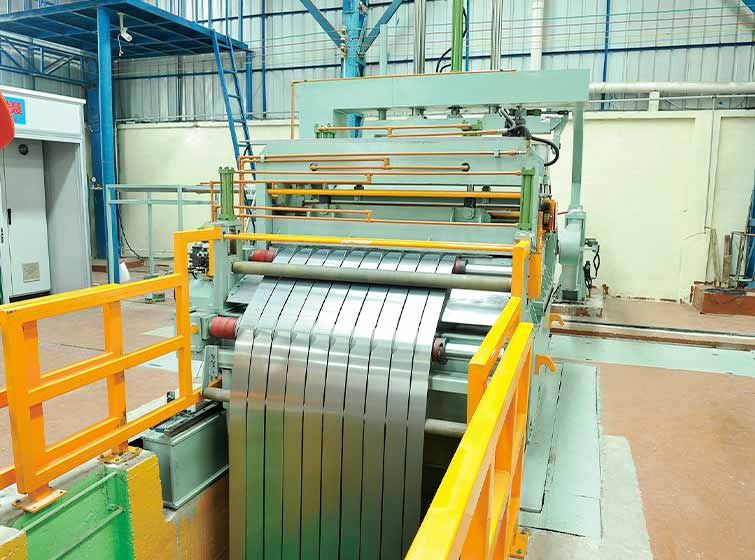
Scrap Device
The Scrap Device is to retrieve the broken belts and aluminium foil chips. It is designed to pump in the broken belts and aluminium foil chips in reject dump and recycled through pipes. The Scrap Device composed of conveyor belt, guide roller, lower and upper shear blades. The conveyor belt is set below the volume space. The guide roller is set below the conveyor belt. The both sides of the conveyor belts have roll mechanism. The scrap recycling box is set on both sides of the waste edge drawing device body. A winding channel is set between the conveyor belt and the roll mechanism.
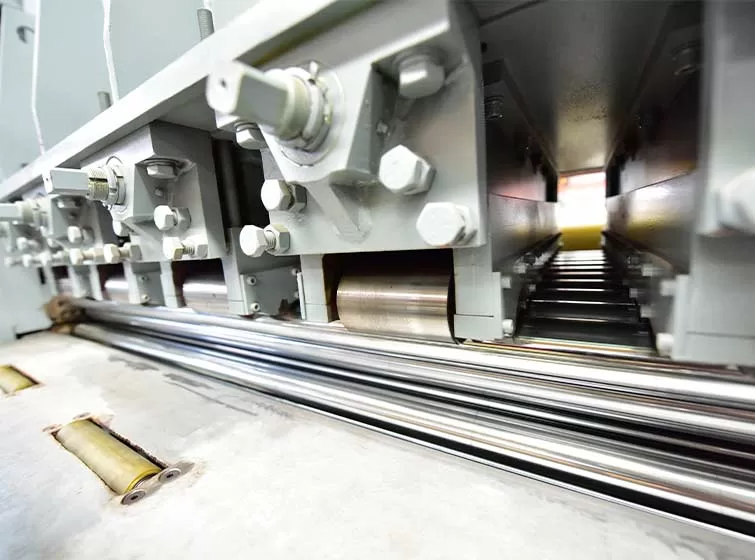
Leveler Device
The leveler device is used to flatten the plate and guide the steel belt into the process. It is equipped with gear and shaft box, leveler device, roller wheel, back roller, clip wheel, and feed guide plate. The leveler device’s main device power is DC 250KW DC motor. The leveler device flat wheel lift is gear reduction motor with brake. The leveler device system control is fully synchronized with the foot feed wheel of the shear bed. It is automatic brake system.
Basic capacity: 6mm~25mm T x 2050mmW hot-rolled steel roll and leveling feeding, etc. The maximum line speed is 40 meters.
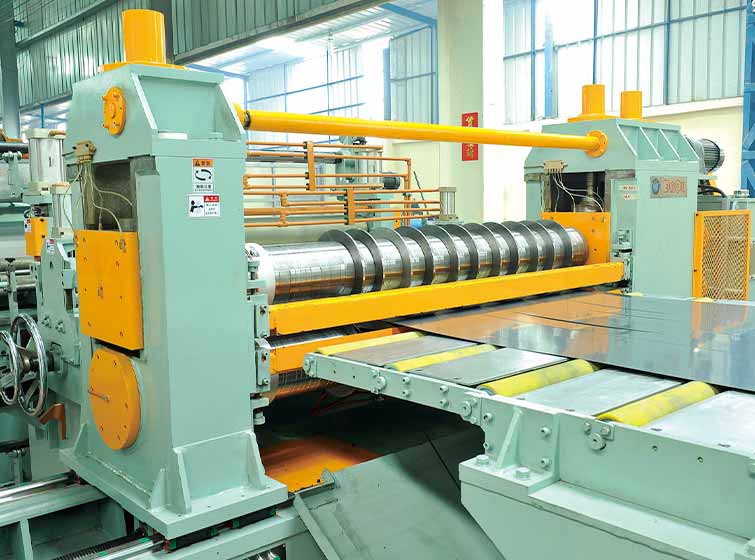
Slitter Device
Slitter Device is a shear device also known as single-blade vertical shear line, single-blade longitudinal cutting machine,and single-blade strip machine, is one kind of metal cutting equipment. The Slitter Device is suitable for the longitudinal cutting of the metal strip, and recoils the narrow strip into a roll.
The Slitter Device is equipped with upper and lower knife frame and smooth system and other components. The Slitter Device are arranged parallel to start the stop working system. The motor are equipped with a safety tooth coupling to ensure the safe use of the Slitter Device. The motor use external ventilation type DC motor and equipped with speed measuring motor that used to measure the speed of the DC motor.
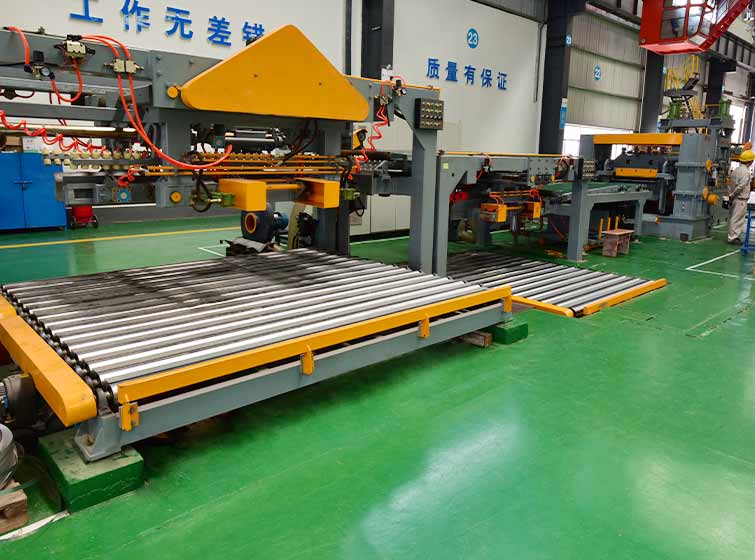
Stacker Device
Stacker Device is used for collect neatly the long steel sheet that sent through the conveyor. The long steel sheet that cut by shear bed is sent through the conveyor. The Stacker Device is equipped with the left width adjustment, right width adjustment, longitudinal adjustment, hand support, side plate, tail hitting plate and lifting device. The left and right width adjustment can adjust the stacking position. The longitudinal position of the stack for the lifting function of the first plate and the thick plate. The stacking frequency can be set on the touch screen. The lifting table has the automatic descent function in the automatic control.
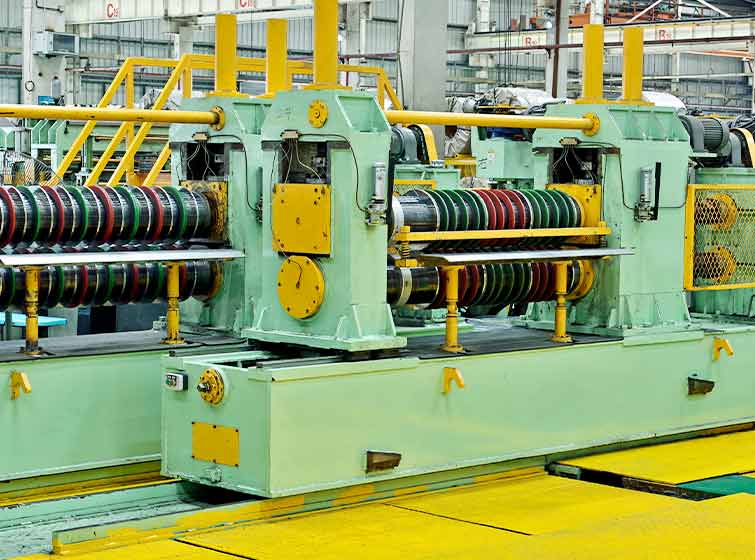
Double Slitter Device
Double Slitter Device is also known as double-blade vertical shear line, double-blade longitudinal cutting machine, and double-blade strip machine, is one kind of metal cutting equipment. The Double Slitter Device is suitable for the longitudinal cutting of the metal strip, and recoils the narrow strip into a roll.
The Double Slitter Device is equipped with upper and lower knife frame and smooth system and other components. The Double Slitter Device are arranged parallel to start the stop working system. The motor are equipped with a safety tooth coupling to ensure the safe use of the Double Slitter Device. The motor use external ventilation type DC motor and equipped with speed measuring motor that used to measure the speed of the DC motor.
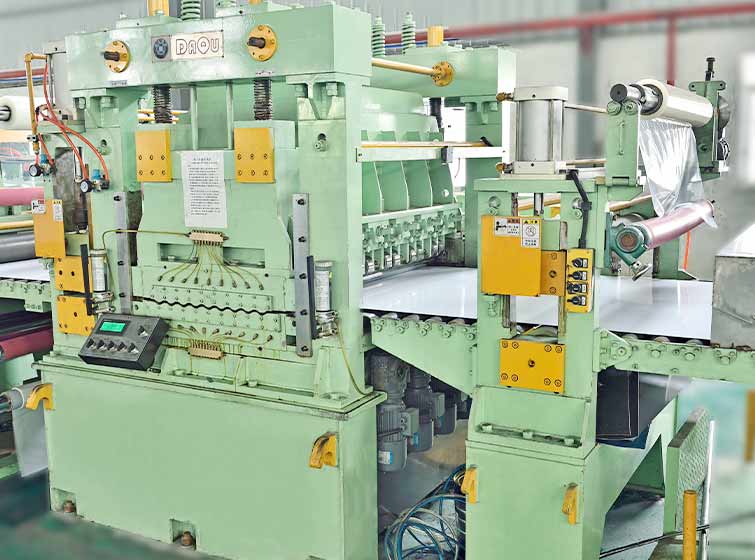
Precision Leveler Device
The Precision Leveler Device used to flatten the plate and guide the steel belt into the process. Precision Leveler Device is a set of high automation equipment. Through NC control ruler length, high precision rotary shear can decoil, flatten and shear the rolling plate into different lengths and specifications. The main working main engine is composed of four main components, such as decoiler, leveler device, shear bed and stacker. It is equipped with feeding trolley, length measuring feeder, conveyor belt, unloading trolley and other devices.
The Ultimate Guide to Metal Cut-to-Length Lines
The Ultimate Guide to Metal Cut-to-Length Lines: A Comprehensive Exploration
The Ultimate Guide to Metal Cut-to-Length Lines is an all-encompassing resource meticulously designed to provide in-depth knowledge and guidance on these critical fabrication machines. Whether you’re a seasoned industry veteran or just starting out, this comprehensive guide offers invaluable insights into every aspect of cut-to-length lines.
Types of Metal Cut-to-Length Lines
Cut-to-length lines come in various types, each suited to specific applications. The guide explores the different types, including:
– Shear Cut-to-Length Lines: Utilizes high-force shearing to cut metal sheets, providing precision and speed.
– Rotary Shear Cut-to-Length Lines: Employs a rotating knife to accurately and efficiently cut metal sheets in longitudinal and transverse directions.
– Slitting Cut-to-Length Lines: Specialized lines that cut wide metal coils into narrower strips, enabling versatile fabrication possibilities.
Components of a Cut-to-Length Line
The guide delves into the intricate components that make up a cut-to-length line:
– Uncoiler: Feeds metal coils into the line, ensuring continuous operation.
– Leveler: Straightens and flattens the metal sheet before cutting, optimizing the cut quality.
– Shear: The heart of the line, responsible for cutting the metal sheet to precise lengths.
– Stacker: Receives the cut sheets and stacks them neatly for convenient handling and storage.
Operation and Maintenance of Cut-to-Length Lines
The guide provides detailed instructions on operating and maintaining cut-to-length lines to ensure optimal performance:
– Setup and Operation: Discusses the proper setup procedures, operating parameters, and monitoring techniques for efficient operation.
– Maintenance and Troubleshooting: Covers essential maintenance practices, troubleshooting tips, and common repair procedures to minimize downtime and extend the line’s lifespan.
Applications and Benefits of Cut-to-Length Lines
The guide highlights the diverse applications of cut-to-length lines in various industries:
– Automotive: Production of automotive body panels, chassis components, and exhaust systems.
– Construction: Fabrication of metal roofing, siding, and structural elements.
– Appliance Manufacturing: Manufacturing of metal parts for appliances such as refrigerators, washing machines, and ovens.
Choosing the Right Cut-to-Length Line for Your Needs
The guide concludes by providing comprehensive guidance on selecting the ideal cut-to-length line for specific requirements:
– Factors to Consider: Enumerates key factors to consider, including material type, cutting capacity, line speed, and automation level.
– Evaluation and Comparison: Outlines steps for evaluating and comparing different cut-to-length line options based on your specific criteria.
CONTACT US


Guangdong DAQU Mechanical Device Co., Ltd
We are always providing our customers with reliable products and considerate services.
If you would like to keep touch with us directly, please go to contact us
-

Home
-
Tel
-
Email
-
Share
-
Contact


